Monday, February 26, 2007

Creating PDFs for the Sony Reader

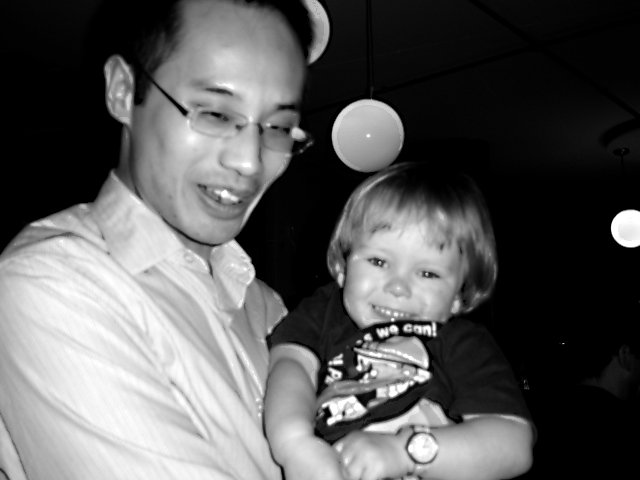
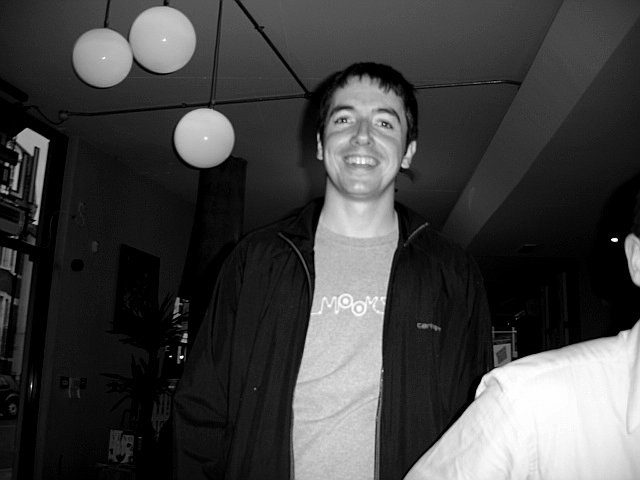
Chris sent me a few pretty pictures. He also reminded me about the ebook reader from Sony, which takes a (closed) format known as BBeB as well as a 600x800 PDF. Finally, sourceforge's shell service has been repaired, so I can now upload again to readng.com.

Tomorrow, there's the first meeting of QISF - the Qatar Information Security Forum. Although it's going to be an introductory talk, with a very general topic, it'll be interesting to see how many people turn up for a get-together.

Friday, February 23, 2007

Slow progress

I spent some of last week with a potential employer; they're into packet radio and need someone to look after a bunch of computers - some of which were familiar and some of which were new to me. Interesting stuff, but they haven't made me an offer, so I won't be counting my chickens just yet.

Sara's been out of the country most of the week, but I managed to get along to the first QSTP tech-talk. It was an entrepreneur who talked about Arab start-ups, venture capital and incubators. There wasn't much talk about the IT side of things, but the audience was full of technologists from the new universities. It was a good place to chat, and I met a couple of people who I'll try to keep in touch with.

Not much has happened with readng. I've been wrestling with font issues on my SuSe system, which are now solved, and I've been trying to put together some sample pages for the site. Unfortunately, mocking up a single page with groff is proving almost as difficult as typesetting a whole book. I keep telling myself that the second book will be easy.

Thursday, February 15, 2007

QSTP tech-talks

Ben Figgis has invited Qatar Perl Mongers to the QSTP tech talks. RSVP to info@qstp.org.qa.

Monday, February 12, 2007

Unix text processing

My new task is to read the relevent chapters of UTP (1.7MB; source available here) and TUM. In particular, I need to get my head around troff, the Unix typesetting system (now, mostly known as groff). I'm convinced that I can secure groff and use it in the typesetting chain for readng.

Here's what I think will be the sequence: (1) ASCII or HTML; (2) groff mm or mom format; (3) postscript/PDF; (4) PNG image.

I know it's a little nasty, using an image format to display pages of text, but that's just tough. HTML in any flavour doesn't give the necessary control for pretty typesetting, and readers want books to look pretty.

Sunday, February 11, 2007

ReadNG - it's like reading, but without the 'i'

So, out of the much nonsense that was spoken over the past week, the silliest is probably this. After several beers with the camel gang, we decided that readng was the next flickr, and that all we needed to succeed in the web 2.0 world was poor spelling. I've registered the domain name readng.com, and written a blurb - let the flood of offers begin. It was Sara who was the first to note that maybe avid book readers might find intentional illiteracy rather annoying. What does she know. Pah.

Camel soup

Chris and Paul have now left. We spent a time in the desert, where we survived on our wits and wild berries. It was touch and go, but when we returned to civilization, we were changed. I was reborn, and dedicated the rest of my life to small-to-medium-sized animals. I salute you, my furry compatriots! Chris and Paul have decided to travel the world as nomadic programmers. And then we went for a chicken biryani, with milky tea, but the smell of the camels remained with us, forever...

Friday, February 02, 2007

Java, Perl and toy planes

Got a few hours work done this morning. Managed to update my java geolocation code for the first time in 18 months. I haven't really done much java in the past few years, so I'm always a bit frightened about changing my old code. I'm not convinced about my abilities to spot bugs any more.

I updated the perl geolocation code at the same time, and fixed a bug that had been hanging around for 6 months. I might have a bash at update instructions - since I became a dad updates haven't been particularly regular.

I was disappointed to receive this email responding to a lecture invitation. What an idiot.

Chris and Paul arrive tonight. Paul emailed yesterday to say he's flying the first leg of the journey in a Fokker 50. I suggested he might have to make plane noises on takeoff. Chris is bringing me a slug, which I'm going to turn into a cheap fileserver.

Wednesday, January 31, 2007

Friends from UK

Robin and Claire were visiting over the past few days, so no coding has been done. I promised Paul Hastings that I'd update the InetAddressLocator, but as yet, I haven't even installed a Java SDK. Oops. The weather's been great for pottering about Doha (Corniche, Souks and Sports City). On Friday night, Chris and Paul arrive, which means either I get to see the sights all over again, or I give them a map and directions.

Sunday, January 07, 2007

RDF::Core and Perl mongers

This morning, I finished tidying up the work I did before Christmas on memory usage in RDF::Core. I've posted the bug reports here. One of the problems with having a holiday is that when you return to work, it takes you days to catch up on projects. I should really make better notes, or keep a TODO list, or something.

Sent an email to CMU about Qatar Perl Mongers, asking them to publicise the society amongst staff and students; received a reply from Chuck Thorpe. Hopefully, there might be some munging soon in Qatar. Once there are a few people signed up to the mailing list, I'll start begging sponsorship to fly an open-source guru out to speak, but that depends on finding enthusiastic members, of which there are currently none.

Warned gutenberg to move their catalog to a mirrored position, as I don't want to gobble up their bandwidth when I release my search code (maybe this week).

Thursday, January 04, 2007

Qatar's Internet security

The Gulf Times announced today that OISSG is holding free security training seminars in Doha over the next couple of weeks. OISSG is a not-for-profit organization dedicated to information security. Sounds tempting, until you realise it's a sales opportunity. Expect to be frightened by cyber-criminals; baffled by the complexity of the problem; and have doubts raised about your ability to protect your systems. "Don't worry, for a small fee, you can have peace of mind by buying our stuff."

If only there was a local IT security organisation looking out for the best interests of Qatar. Well, there might be soon. Q-CERT is being set up and is recuiting. From the job specs and application procedures, you could be forgiven for thinking the jobs are limited to US academics. However, Q-CERT is undeniably a good thing - I just wonder whether its main focus will be to protect the new universities and financial centre, or whether it will also try to fix some existing problems.

The recent wikipedia silliness has exposed a security vulnerability that is politically charged. Resident web-surfers know their requests are funneled through an automated filter, which occasionally protects them from their own seedy surfing habits (or just blocks sites at random). It is also well known that there is no censorship in Qatar. Bafflingly contradictory? Nope. The local ISP does the filtering, and it is operationally independent from the government.

The filter is now a well-publicised single point of failure, which any technologist will tell you is a tempting target for an american teenager. Knock out the filter, and you knock out web access for an entire country. Will Q-CERT recommend removing the filter? If so, it might be tough to find the decision-maker responsible for censorship when the role was abolished in 1996.